

 By
By 
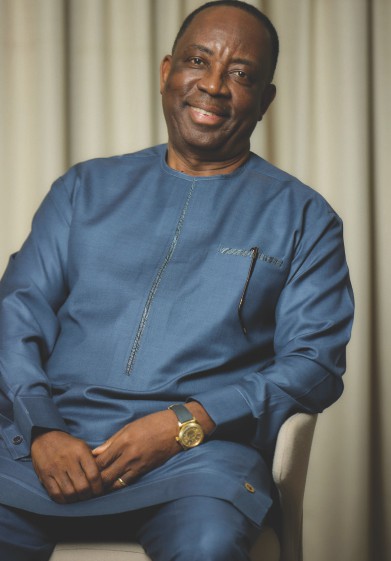 Top Guide: KGL has been recognized for its transformative impact in finance and telecommunications. Could you elaborate on the strategies that have positioned KGL group as a leader in these sectors, and how have they enhanced investment prospects in Ghana?
Alex Apau Dadey: At the core of everything we do at KGL is what I call responsible corporate citizenship, by which I mean going beyond the bottom line and focusing on creating real social impact. This includes environmental stewardship, ESG principles, strong governance, and a commitment to the communities we serve. At KGL, we believe that making a meaningful impact in the communities where we operate is not only the right thing to do, it also makes good business sense. Our approach is to spread wealth and opportunity. Through the KGL Foundation and other arms of the group, we actively support small and medium-sized enterprises. For instance, KGL Capital is dedicated to supporting start-ups and entrepreneurs.
We have invested significantly in start-ups because we believe that Ghana and Africa more broadly, needs business champions and strong conglomerates to anchor the value chain. While we employ around 300 people directly, our indirect impact touches more than 10,000 individuals. We are also one of MTN’s largest partners, meaning a portion of their profits comes from our operations. Many industries benefit from what we are doing. On the community side, we established the KGL Foundation as a dedicated vehicle to drive our social impact. It is intentionally not commercially focused. The Foundation supports around 200 cottage industries and small-scale enterprises, most of which are run by women and young people. This makes our impact inclusive and far-reaching.
Responsible corporate citizenship, for us, also means building businesses that outlive their founders. I have always said that Africa suffers from being in a perpetual start-up mode. Too often, a visionary establishes a business, but when that person is no longer there, the business fades. We need to build businesses that transcend generations.
I BELIEVE AFRICA’S
GREATEST UNTAPPED
ASSET IS ITS DIASPORA.
TG: TG: In your address at the Africa Prosperity Dialogues 2025, you emphasized the importance of public private partnerships as well as diaspora investment for sustainable economic growth. How is KGL helping to facilitate collaborations of this nature?
AAD: One of the key things we do at KGL Group is facilitate investment into Ghana by attracting investors who are seeking meaningful partnerships. For example, an investor might want to bring in $100 million but is not looking to do it alone. They want a Ghanaian partner who is equally invested in the success of the venture. KGL Group provides that bridge by offering these investors access to credible local partners. We firmly believe that PPPs are the way forward for economic growth. The public sector, not just in Ghana but globally, often lacks the efficiency to drive transformation alone. When the private sector is brought in – and there is ownership and skin in the game – you get better outcomes. We have seen this firsthand. At KGL, we actively look for sectors where we can intervene and add value. One example is the National Lottery Authority (NLA), which was struggling. We stepped in and have completely transformed that space and now about 90% of their profits come through us. We are also working with the Ministry of Fisheries to modernise and digitize the sector, using technology to disrupt outdated systems and introduce new ways of operating.
The diaspora also plays a crucial role. I believe Africa’s greatest untapped asset is its diaspora. To put it in perspective, foreign direct investment into Ghana is currently around $2 billion. But unofficial figures suggest that diaspora remittances are closer to $8 billion. The key question is how we convert those remittances from consumption into productive investment. The diaspora brings not only financial capital but also expertise. I am a clear example of that. Before KGL, I was virtually unknown in Ghana’s business landscape because my wealth was built abroad. The capital I used to start KGL Group came from outside the country, but the impact has been local – creating jobs and opportunities for Ghanaians. Many of our employees are either locals or returnees from the diaspora. By combining diaspora technology and capital with local expertise, we have created a powerful formula for growth. The diaspora also has a deep emotional attachment to their home country. Unlike other investors, they are less likely to pull out during turbulent times. That makes them a force for economic stability, and they often become ambassadors for attracting even more foreign investment.
TG: What emerging sectors do you identify as promising for future investments in Ghana and also how is KGL the group positioning itself to capitalise on these opportunities?
AAD: AAD: I have always believed in the power of the service industry, particularly sectors like tourism and technology, as key drivers of growth. I take a slightly different view when it comes to manufacturing. While I agree that manufacturing is valuable as an import substitution strategy, I do not see it as the most effective route for creating employment or generating wealth.
Modern manufacturing is largely technology driven. A large factory that might have employed 100 people in the past can now operate with just five, often with even greater output. This shift limits the sector’s potential to address the critical issue of youth unemployment in Africa. Instead, we need to focus on sectors that can absorb more labour. A small hotel, for instance, with a turnover just a fraction of that of a manufacturing firm, could employ ten times more people. That is why I advocate for prioritizing the service sector, especially tourism and tech. In Ghana, we are seeing a wave of highly intelligent tech entrepreneurs emerging. I believe Ghana is one of the leading countries in Africa in terms of technological innovation. These are areas we can not only develop locally but also export, both to other African nations and to Western markets.
TG: How do the investments the KGL Foundation has made in healthcare infrastructure align with the group’s business objectives and what impact do they have on the community development?
AAD: At the KGL Foundation, we have structured our work around five key thematic areas: health care (including mental health), education, youth entrepreneurship, sports, and community development. I have always believed in the saying by the Roman poet—a healthy mind in a healthy body. Everyone faces mental health challenges at some point, whether it is stress, anxiety or depression, even if they are not always visible. We believe that supporting mental health is essential for national development, which is why we have prioritized it. We have invested significantly in mental health infrastructure, including a state-of-the-art facility in Kumasi in the north of the country. Beyond that, we actively collaborate with the Mental Health Authority and participate in various mental health initiatives.
We also see sports as a vital contributor to both physical and mental well-being. In fact, KGL is one of the leading corporate sponsors of sport in Ghana. Just yesterday, we signed a Ghc20 million sponsorship deal with the Ghana Football Association. This follows previous sponsorships worth two million dollars in total, supporting the national team and youth development, including under-17 and juvenile players.
Our commitment extends to inter-school sports, and we also sponsor Ghana’s largest marathon – the KGL Millennium Marathon – which welcomes runners from across the globe each September.
In addition, we run scholarship and training programs in underserved communities. We are strong advocates of the United Nations Sustainable Development Goals, particularly the final one: partnerships for the goals. We believe lasting impact comes through collaboration, not working in isolation. We also partner with commercial entities to co-fund some of these smaller initiatives. That collaborative model is at the heart of everything we do.




Comments