

 By
By 
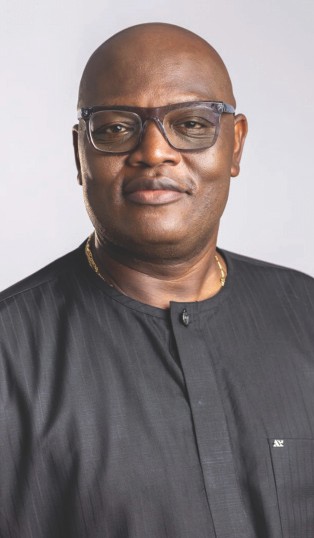
Top Guide: With the implementation of the African Continental Free Trade Area (AfCFTA), what strategies is the GIPC employing to position Ghana as a preferred investment destination within this new continental framework?
Simon Madjie: In response to the AfCFTA, the Ghana Investment Promotion Centre (GIPC) is taking deliberate steps to strengthen Ghana’s position as a gateway for investment into Africa. The Centre has established a dedicated AfCFTA Desk to support both Ghanaian investors seeking to expand into Africa and intra-African investors entering Ghana. It will also support foreign investors that seek to use Ghana as a stepping stone into the African market. The GIPC is also reviewing its law to align it with the AfCFTA Investment Protocol. As part of the review, the minimum capital requirements that could otherwise hinder cross-border investment will be removed. The Centre will collaborate with other Investment Promotion Agencies on the continent as well as undertake targeted investment promotions in selected African countries to showcase the investment opportunities in Ghana to intra-African investors.
These efforts will involve showcasing specific investment opportunities across various sectors in Ghana, highlighting the country’s competitive advantages, regulatory reforms, and market potential. The Centre will facilitate the participation of local businesses in Regional Value Chains (RVCs) through expedited Technology Transfer Agreements (TTAs). The GIPC will collaborate closely with other relevant stakeholders such as the Office of the Registrar of Companies, the Bank of Ghana, and the Ghana Statistical Service among others to improve the Centre’s service offerings and better support intra-African investors.
Top Guide: The GIPC has announced plans to realign investment priorities to support the government’s “24-hour economy” initiative. Could you elaborate on how this strategy is expected to attract global investors and stimulate economic growth in Ghana?
Simon Madjie: To support the government’s 24-hour economy initiative, GIPC is introducing measures to make Ghana more attractive to global investors seeking around-the-clock production and service opportunities. The Centre will create a dedicated 24-Hour Economy Desk to coordinate with the 24-Hour Economy Secretariat and guide investors to invest in priority sectors as well as support them to access the incentives provided by the policy. Also, the new Ghana Investment Promotion Authority Bill includes provisions to incentivise businesses that will operate under the 24-Hour Economy Policy. To fast-track investor services, the Centre has introduced the 24-hour Premium Service that ensures that company registrations, certificate renewals and Automatic Immigrant Quotas are processed within 24 hours.
In addition, the Centre has set up a Technology Transfer Unit to expedite the registration and renewal of technology transfer agreements (TTAs). Currently, registration of TTAs takes four weeks, and renewals are completed between four to eight weeks instead of the previous two and a half years. These measures are expected to enhance Ghana’s appeal to global firms and stimulate continuous economic activity in the country. The Centre will actively promote investment opportunities within the priority sectors of government—manufacturing, logistics, ICT/Business Process Outsourcing, agro-processing, and energy among others—by designing sector-specific promotional strategies.
Top Guide: Ghana is undertaking the US$10 billion ‘Big Push’ infrastructure program to transform its roads, railways, and energy systems. How does the GIPC plan to leverage this initiative to attract investments into the infrastructure sector?
Simon Madjie:The Big Push initiative remains a top priority for the Government of Ghana and the GIPC will concentrate its investment promotion efforts on attracting global infrastructure investors to support the delivery of transformative infrastructure projects across the country. The Centre will structure bankable infrastructure projects in transport, logistics, and energy among others and promote them to suitable investors. The Centre will also leverage the Investment Opportunity Mapping Programme (IOMP) to identify critical infrastructure gaps and actively promote these opportunities to local investors. In collaboration with relevant Ministries, Departments, and Agencies (MDAs), the Centre will identify, prepare, and promote specific bankable infrastructure projects, including targeted Public-Private Partnership (PPP) initiatives.
Furthermore, GIPC will support government agencies, regional stakeholders, and Ghana’s foreign missions abroad with model investment presentations and pitches to enable them to effectively promote specific infrastructure investment opportunities under the Big Push to potential partners and financiers both in Ghana and abroad. The Centre will provide targeted incentives for strategic infrastructure investments, especially those addressing underserved regions. The GIPC will also engage the Ghanaian diaspora and friendly sovereign partners, such as China, the United Arab Emirates and the European Union as strategic investors or co-financiers for the Big Push initiative.
Top Guide: You have outlined plans to map investment opportunities across all districts in Ghana. Could you provide insights into how this initiative will enhance regional development and attract investments to less explored areas?
Simon Madjie: Through the profiling of the 261 districts, a spotlight will be shed on lesser-known areas with untapped potential to improve their visibility to local and global investors. This will in turn attract investors to these areas who, through this initiative will gain easy access to detailed data on land availability, local resources, infrastructure, and incentives. The project will empower the local government at the district level as active partners in investment attraction, ensuring cooperation, faster response times and better support for projects. Training and collaboration with District Planning Officers (DPOs) builds local capacity and better equips them to engage with investors.
The initiative aims to trigger 50+ investment projects in underserved areas, creating over 31,000 estimated jobs. Investment will drive infrastructure development, local enterprise growth, and skills transfer, directly uplifting district economies. The project will explore and promote the resources or elements unique to each district and consequently develop policies and incentives to encourage global investment. Profiling will highlight district-specific policy recommendations, such as tax breaks, to boost competitiveness. This will enable districts to capitalise on their ‘signature assets’ while levelling the playing field for less developed districts. By connecting regional potentials to continental markets (AfCFTA), and learning from Rwanda and Kenya, Ghana can replicate strategies that have attracted billions in rural FDI.
Top Guide: Are there any particular projects you would like to highlight for our audience of global investors?
Simon Madjie: The Government of Ghana is prioritising targeted investment projects across key sectors to drive inclusive economic development. In agriculture, specific projects include the establishment of 50 farmer mechanisation centres to boost productivity and support value chain development. In the health sector, some projects include completion of the Agenda 111 hospitals, construction of a 500-bed children’s hospital and cancer treatment centre, and expansion of the Ridge Hospital into a teaching hospital. The Tourism sector presents opportunities for the refurbishment of Osu Castle and the revival of the Marine Drive Project, which aims to transform over 240 acres of Accra’s coastline into a vibrant commercial and cultural hub.
Under the US$10 billion “Big Push” infrastructure programme, the government is prioritising roads and transport systems. Key highway upgrades include the dualisation of the Accra-Kumasi, Accra-Takoradi, and Accra-Aflao roads. In the energy sector, the government plans to construct a second gas processing plant, three oil refineries, five hydrochemical plants, and ten tank farms to expand processing capacity and increase the value derived from Ghana’s hydrocarbon resources.






Comments