

 By
By 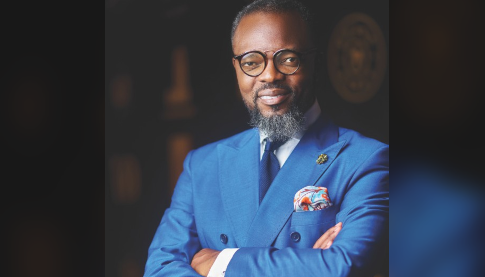
 Top Guide: There is a growing interest from the African diaspora to contribute to Ghana’s economic growth through various avenues. How is the Diaspora Affairs Office working to convert this interest into more direct and impactful investments?
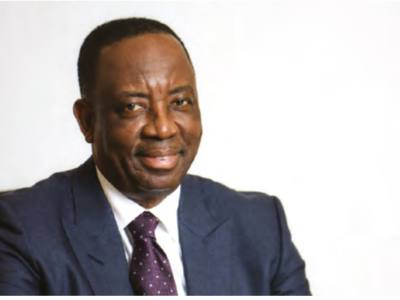
Kofi Okyere-Darko: At the Diaspora Affairs Office, Office of the President, one of our top priorities is to convert the goodwill and growing interest of the Ghanaian and African diaspora into structured, long-term economic participation. While annual remittances remain a vital contribution—exceeding $4.5 billion—we are focused on moving beyond remittances toward investment, skills transfer, philanthropy, and institutional collaboration.
In alignment with the Ghana Diaspora Engagement Policy, we are rolling out the Diaspora Registry/Database, a digital platform to link diaspora investors to high-impact, vetted opportunities in priority sectors such as agriculture, technology, renewable energy, health, housing, and the creative economy. This registry helps us coordinate and profile diaspora expertise and capital for more strategic engagement.
We are also establishing Diaspora Investment mechanisms (including potential Diaspora Funds, Investment Portals) to provide real-time access to investment opportunities, regulatory guidance, and trusted service providers—particularly in sectors where diasporans face risk such as real estate and business registration.
Partnerships with agencies like the Ghana Investment Promotion Centre (GIPC), Ministry of Finance, and Ministry of Trade and Industry allow us to offer diaspora-specific incentives and institutional support through dedicated investment desks and diaspora-targeted business missions.
Moreover, we are actively encouraging knowledge-sharing initiatives by connecting diaspora professionals—especially in healthcare, education, and entrepreneurship—with short-term service opportunities in Ghana, such as medical outreach missions and innovation hubs.
Importantly, we are working to meaningfully engage second- and third-generation diasporans by supporting youth-centered cultural and professional exchange programs. These include partnerships with diaspora-led organizations that create soft landing points for reconnecting with the homeland through both cultural identity and economic opportunity.
TG: How is your office collaborating with banks and other financial entities to provide tailored financial solutions that encourage diaspora investments?
KOD: TWe recognize that a strong financial infrastructure is key to unlocking sustainable diaspora investments. That’s why we are working with banks, development finance institutions, fintech companies, and real estate partners to co-create diaspora-friendly financial instruments and pathways. We’ve held meetings institutions such as Consolidated Bank Ghana (CBG),which now operates a dedicated diaspora desk offering tailored products like diaspora savings accounts, investment advisory services, and secure mortgage financing. These address long-standing challenges including fraud, limited access to reliable partners, and trust barriers in transacting from abroad.
We are in active dialogue with the Bank of Ghana, local banks, and financial cooperatives to design frameworks for pooled diaspora investments into strategic national projects—especially in infrastructure, green energy, health, and affordable housing. Additionally, we are facilitating a trusted ecosystem of vetted real estate developers, legal advisors, and SMEs that diaspora investors can confidently engage with—many of whom will be featured at our upcoming National Diaspora Summit, a convening platform to drive diaspora capital mobilization, build investor confidence, and deepen public-private partnerships.
Our goal is to make investing from abroad safe, seamless, and sustainable—not just as a transaction, but as a partnership.
TG: With the momentum created by Ghana’s recent citizenship grants to members of the diaspora, how is the Diaspora Affairs Office leveraging this goodwill to foster long-term investments and promote deeper economic integration of diaspora communities?
KOD:The conferment of citizenship to members of the diaspora—beginning under President Mahama in 2016 and renewed in 2019 and 2024—is a powerful recognition of belonging, but it is also an economic and civic strategy.
At the Diaspora Affairs Office, we have built on this goodwill through our Diaspora Citizenship and Integration Programme (DCIP), which supports new citizens in navigating Ghana’s business landscape, legal systems, and socio-economic opportunities. We coordinate with the Ministry of the Interior, Ghana Immigration Service, and legal advisory partners to simplify processes related to dual citizenship, permanent residency, and investor visa pathways.
We are also advocating for targeted policy incentives—such as tax breaks, duty-free concessions, and land access schemes—for diaspora investors and returning citizens. Our goal is to remove friction in the relocation and reintegration journey. Beyond this, we are developing a Diaspora National Service Scheme to enable second- and third-generation Ghanaians abroad to serve and connect with Ghana, while also establishing support mechanisms for vulnerable diaspora populations, including returnees from conflict zones or those facing economic hardship abroad.
Citizenship must translate into economic access, social inclusion, and national contribution—and we are committed to ensuring that it does.
TG: Looking ahead, what is your vision for the role of the Ghanaian diaspora in the country’s long-term economic development agenda, and what message would you like to convey to diaspora investors who are considering Ghana as their next investment destination?
KOD: Our vision is bold and clear: the Ghanaian and broader African diaspora must be positioned not as observers, but as co-architects of Ghana’s transformation. The diaspora holds immense reservoirs of capital, skills, innovation, networks, and global experience—all of which are essential to Ghana’s long-term development strategy. As Ghana repositions itself as a hub for Pan-African excellence, diaspora investment is no longer a luxury—it is a necessity. Under the leadership of H.E. President John Dramani Mahama, we are fully committed to mainstreaming the diaspora into national development. The Diaspora Engagement Policy is our roadmap, and we are aligning all relevant sectors to make Ghana a welcoming, reliable, and rewarding destination for diaspora investors.
OUR VISION IS BOLD AND CLEAR: THE GHANAIAN AND BROADER AFRICAN DIASPORA MUST BE POSITIONED NOT AS OBSERVERS, BUT AS CO-ARCHITECTS OF GHANA’S TRANSFORMATION.
Our message to diaspora investors is simple: Ghana is open—not just for business, but for partnership, legacy, and leadership. Let your return be more than ceremonial. Let it be transformational—for you, for your family, and for the country you proudly call home.




Comments