

 By
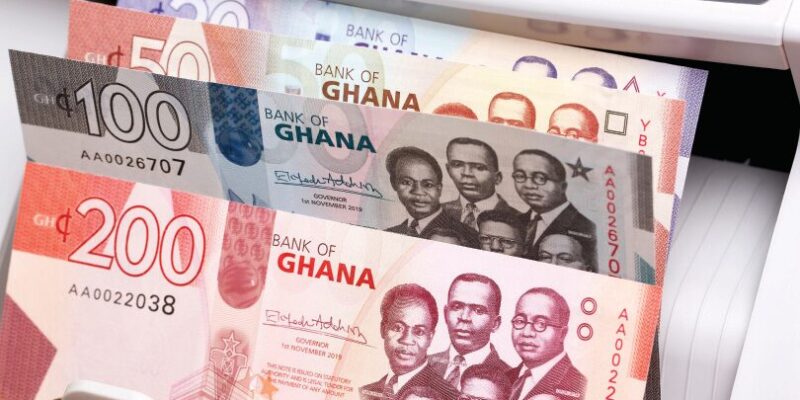
The financial services sector in Ghana continues to demonstrate resilience and growth, driven by ongoing digitisation, progressive regulatory support, and increasing investor confidence. This dynamic landscape encompasses a diverse range of institutions, including domestic and international banks, insurance providers, asset managers, and a thriving stock exchange.
BANKING SECTOR: STABILITY AND DIGITAL EVOLUTION
Ghana’s banking landscape currently comprises 23 banks, operating under the stringent oversight of the Bank of Ghana (BoG). These institutions are central to providing a wide array of financial services to individuals, businesses, and the government. Complementing the banking sector are 25 savings and loans institutions, 11 finance houses, and 3 finance and leasing houses, offering specialised services that broaden financial access.
The sector’s recovery has been pronounced. Total assets reached GH¢502.4 billion in June 2026, up from GH¢384.3 billion a year earlier, while customer deposits grew to GH¢370.8 billion from GH¢280.1 billion. The capital adequacy ratio strengthened to 20.4 per cent and the non-performing loan ratio fell to 16.1 per cent from 23.1 per cent a year earlier, with the BoG directing banks to bring it below 10 per cent by the end of 2026. Total advances rose to GH¢124.3 billion as lending resumed.
The central bank is keen to support digitisation, in alignment with the government’s cash-lite agenda, promoting digital payments and ensuring a secure payment infrastructure. Mobile money remains the clearest expression of that agenda: transactions were valued at GH¢493.2 billion in April 2026 alone, across 967 million transfers and 26 million active accounts. Having tested the e-Cedi digital currency with Giesecke+Devrient (G+D), the bank has since moved from signalling cryptocurrency policy to regulating it outright.
TOTAL BANKING SECTOR ASSETS REACHED GH¢502.4 BILLION IN JUNE 2026, UP FROM GH¢384.3 BILLION A YEAR EARLIER, WHILE NON-PERFORMING LOANS FELL TO 16.1 PER CENT FROM 23.1 PER CENT.
INSURANCE
The Ghanaian insurance sector operates under the oversight of the National Insurance Commission (NIC), which supervises 26 non-life companies, 19 life insurers and 2 reinsurers. While the sector has witnessed substantial growth over the years, insurance penetration remains at around 1 per cent of GDP, lagging behind regional peers. This low penetration is attributed to limited awareness, high premium costs, and distrust of insurance providers. However, when considering health insurance and pensions, the penetration rate is estimated to be 3 per cent, indicating significant room for improvement.
Non-life premiums reached GH¢5.0 billion and life premiums GH¢2.33 billion, with reinsurance at GH¢897 million, though inflation eroded much of that gain in real terms. The market remains somewhat concentrated, with the top four companies in the life segment accounting for about 75 per cent of all life insurance premiums. The fragmented market below the top players, where smaller insurers hold less than 8 per cent market share, suggests potential for consolidation, possibly driven by foreign entrants.
Technological advancements, particularly in direct digital sales and services, are aiding in increasing insurance accessibility. Operating under the Insurance Act, 2021 (Act 1061), the NIC continues to advance its digital transformation agenda through its regulatory sandbox, and new mobile-driven insurance solutions are being launched, leveraging mobile money platforms to provide affordable protection.
CAPITAL MARKET: GROWTH TRAJECTORY AND DIVERSIFICATION
The Ghana Stock Exchange (GSE) serves as a vital platform for trading securities, and 2026 has been an exceptional year for it. The GSE Composite Index returned 63.4 per cent in the first five months of the year, crossing 15,000 points and ranking the exchange among the best-performing equity markets in the world. Equities market capitalisation stood at GH¢263 billion in June 2026, with the fixed income market adding a further GH¢253 billion with a combined total more than triple the GH¢139.88 billion recorded a year earlier.
Three initial public offerings within six months raised approximately GH¢2 billion (US$182 million), the most active primary issuance period in nearly a decade. The GSE lists a variety of securities, including shares, corporate bonds, municipal bonds, government bonds, and unit trusts, with leading domestic banks, mining, and food and drink companies among its listed entities. The Ghana Fixed Income Market facilitates secondary trading of fixed income and other securities, further contributing to market liquidity.
The exchange continues to drive the transformation of the capital market from a frontier to an emerging market, including initiatives to introduce new products such as derivatives and green bonds to enhance liquidity and attract investors. The Securities and Exchange Commission (SEC) maintains a balanced approach to market regulation, fostering innovation while safeguarding investor interests, market integrity, and financial stability.
PENSIONS SECTOR: EXPANDING COVERAGE AND INNOVATIVE SOLUTIONS
Ghana’s pension schemes aim to provide retirement benefits through a three-tiered structure: the Basic National Social Security Scheme (tier 1, mandatory, administered by the state-owned Social Security and National Insurance Trust); a mandatory, fully-funded occupational pension scheme (tier 2); and a voluntary provident fund and personal pension plans (tier 3).
The National Pensions Regulatory Authority (NPRA) continues to implement its strategic plan to increase pension coverage and reduce old-age poverty, while boosting the sector’s contribution to the economy. Assets under management have grown from GH¢78.2 billion in mid-2024 to a pool now estimated to exceed GH¢100 billion, historically concentrated in government securities. The NPRA is redirecting part of that capital towards productive investment, requiring schemes to allocate at least 5 per cent of assets to private equity and venture capital on a phased basis, a measure that could unlock around GH¢5 billion of growth capital, with agribusiness, health technology, logistics, digital finance, and climate-smart technology identified as priority destinations.
REGULATORY LANDSCAPE AND FUTURE OUTLOOK
Ghana has moved decisively on digital assets. Parliament passed the Virtual Asset Service Providers Bill at the end of 2025, establishing a legal and regulatory framework for virtual assets and the firms that deal in them. Licensing and supervision are shared between the Bank of Ghana and the Securities and Exchange Commission depending on the activity, with implementing directives to follow. The framework closes long-standing regulatory gaps and strengthens consumer protection in a market where sub-Saharan African crypto flows now exceed US$200 billion annually. The Bank of Ghana also issued the Climate-Related Financial Risk Directive in November 2024, signalling a focus on sustainable finance.
Overall, Ghana’s financial services sector presents a compelling frontier for investment. The combination of a stable banking system, a growing insurance market driven by digital adoption, a maturing capital market with a focus on diversification, and an expanding pension sector offering innovative solutions, positions Ghana as a promising destination for both local and international investors seeking growth opportunities in a dynamic African economy. Challenges such as financial literacy and digital infrastructure gaps in rural areas remain, but ongoing efforts by regulators and market participants are addressing these to further strengthen the sector’s foundation.
SECTOR OPPORTUNITIES
- Partnering with insurance companies to expand their market reach through Bancassurance.
- Partnering with government industrialisation programmes to provide subsidised loans to emerging companies, boosting loan book balances and interest income.
- Opportunities exist in developing technological infrastructure for online banking, enhancing convenience and accessibility for customers.
- Establishing banking institutions like savings and loans companies to target the unbanked population, providing financial services to those who cannot access traditional banking systems.
- Introduction of InsurTech solutions to offer policies and claims filing through mobile devices, eliminating the need for physical branches.
- Marketing microinsurance policies to low-income individuals who may not have access to traditional insurance services.
- As lending rates decrease, the demand for mortgage facilities increases, providing opportunities for financial institutions to offer insurance products for these properties.
- The GSE plans to introduce Green Market products and derivatives, providing more investing opportunities for pension funds and allowing them to diversify their asset base.
- There are opportunities to establish institutions and mutual funds to leverage global securities, potentially attracting the unbanked population through education about investing.
- Opportunities exist to invest in fintech solutions that improve cybersecurity within the capital markets, ensuring the safety of transactions and data.
- With Ghana’s relatively high literacy rate of 69.8 per cent there are opportunities to encourage the population to enrol in voluntary pension schemes, fostering a savings culture among citizens.
- The NPRA’s requirement that private pension schemes allocate at least 5 per cent of assets to private equity and venture capital creates opportunities for foreign investors to participate in and co-manage such funds.
- NPRA aims to introduce special legislation for the informal sector, leveraging mobile money platforms to promote pension coverage and offering incentives to members who choose this method for retirement planning.
- The new virtual asset licensing regime opens a regulated route into digital asset exchange, custody and payment services for the first time.
INVESTMENT INCENTIVES
- Ghana’s youthful population of over 34 million, growing at roughly 2 per cent a year, offers significant potential for economic transformation and growth, particularly in the financial sector.
- Initiatives across the financial industry aim to capture the unbanked population, evident in the substantial growth of mobile money transactions – from GH¢32.8 billion for the whole of 2019, to GH¢493.2 billion in April 2026 alone, with 83 million registered accounts.
- The NPRA has mandated pension fund investment in private equity and venture capital, aiming to diversify Ghanaian pension fund assets and provide a capital boost for the economy.
- Various sub-sectors within the financial industry are developing technological infrastructure, such as online banking applications, enabling customers to conduct financial transactions seamlessly through online platforms, enhancing convenience and accessibility.
- Aligned with the SEC’s strategic plan, the Ghana Stock Exchange will introduce securities focusing on sustainability and green practices. This initiative provides investors with more options for investment securities, tapping into the global trend towards green business practices. ■TG









Comments