

 By


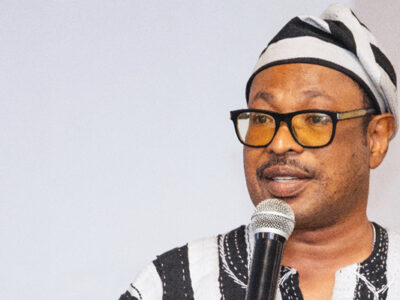
Razak Baba, Deputy CEO, Ghana Investment Promotion Authority (GIPA)
Ghana is positioning itself. What have been the most significant shifts in the investment landscape?
Razak Baba: There is Crisis Ghana, where growth fell to 2.9 percent in 2023 and policy was about survival. Then there is Reset Ghana, where growth rebounded to roughly 6 percent in 2025, the strongest since 2019.
FDI tells the same story. From about $652 million in 2024, inflows reached an estimated $2.61 billion in 2025, a fourfold increase. Three laws have reshaped the landscape: the Exemptions Act, 2022; the 24-Hour Economy Authority Act; and the Ghana Investment Promotion Authority Act, 2026. The last transformed the Centre into the Ghana Investment Promotion Authority (GIPA), removed the blanket minimum capital requirements that had long been a major investor concern, and made GIPA Ghana’s focal institution for the AfCFTA Protocol on Investment.
What is being done to incentivise industrialisation outside Accra and Kumasi?
Razak Baba: The imbalance is real, even though Ghana already offers generous locational incentives. For agroprocessors, corporate tax rates fall from 25 percent to 15 percent in regional capitals outside Accra and Tema, and to as low as 5 percent in the five northern regions. The incentive architecture is not the main constraint. We are now addressing infrastructure, skills and information.
Government’s $10 billion Big Push Infrastructure Programme is intended to modernise roads, bridges, ports, rail and aviation nationwide. The Adawso-Ekye Amanfrom Bridge and the Volta Economic Corridor are about connecting food-producing and industrial zones to markets.
On skills, the National Apprenticeship Scheme, the 1 Million Coders initiative and TVET Digital Centres of Excellence across all 16 regions are designed to build the workforce pipeline that makes a regional factory viable. The third gap is information. Our Investment Opportunities Mapping Project, launched in July 2025, is profiling investable opportunities across all 261 districts, supported by regional roadshows and the Ghana Diplomatic Investment Drive.
How will the relaxation of minimum foreign capital requirements affect smaller foreign enterprises?
Razak Baba: Under the old GIPC Act, a foreign investor entering a joint venture with a Ghanaian partner needed $200,000 in equity. A wholly foreign-owned enterprise needed $500,000, while trading required $1 million. In practice, those thresholds screened out investors Ghana now needs, including software start-ups and diaspora entrepreneurs with viable business plans but smaller capital bases.
The new act removes the blanket threshold for joint ventures and wholly foreign-owned enterprises. Trading remains the carve-out. A foreign investor in that sector must still bring $500,000 in cash, down from $1 million, with at least 75 percent of the workforce required to be skilled Ghanaians. This is deliberate, because trading is most exposed to concerns about foreign capital displacing Ghanaian retailers rather than adding productive capacity.
The change should support diversification, especially in services, technology and light manufacturing. It should also help regional dispersion, because smaller-ticket investors are often more willing to test secondary cities. The law does not remove oversight. Sector regulations remain, but safeguards move from a flat rule to terms calibrated to each industry’s realities.
GHANA IS THE NATURAL FIRST STOP FOR COMPANIES TRYING TO UNDERSTAND HOW CONTINENTAL TRADE RULES WILL WORK IN PRACTICE
How is Ghana translating the presence of the AfCFTA Secretariat into investment inflows?
Razak Baba: Having Secretary-General Wamkele Mene and his team headquartered in Accra makes Ghana a natural first stop for companies trying to understand how continental trade rules will work in practice. The new GIPA Act formalises this advantage by making GIPA Ghana’s focal institution for the AfCFTA Protocol on Investment.
Ghana has also begun harmonising regulation with peer markets, including the fintech passport arrangement with Rwanda. A company that establishes compliance and licensing in Accra does not have to rebuild everything from scratch elsewhere on the continent.
IN MAY 2025, GHANA SIGNED A $1 BILLION AGREEMENT WITH THE UAE TO BUILD ONE OF AFRICA’S LARGEST AI AND INNOVATION HUBS AT NINGO-PRAMPRAM. ABOUT $400 MILLION IS EARMARKED FOR AI AND ADVANCED COMPUTING, INCLUDING AN AI COMPUTE HUB WITH G42, AND A FURTHER $350 MILLION FOR DIGITAL INFRASTRUCTURE.
How is Ghana positioning itself for international tech investors?
Razak Baba: In May 2025, Ghana signed a $1 billion agreement with the UAE to build one of Africa’s largest AI and innovation hubs at Ningo-Prampram. About $400 million is earmarked for AI and advanced computing, including an AI Compute Hub with G42, and a further $350 million for digital infrastructure.
Cabinet has approved Ghana’s National Artificial Intelligence Strategy and a $250 million national AI computing centre. Government also opened a competitive 5G spectrum auction so qualified players can build the network on fair terms. None of this means much without talent, which is why Ghana’s Digital STEM Education Project with South Korea, running through 2032, is important. ■TG







Comments