

 By
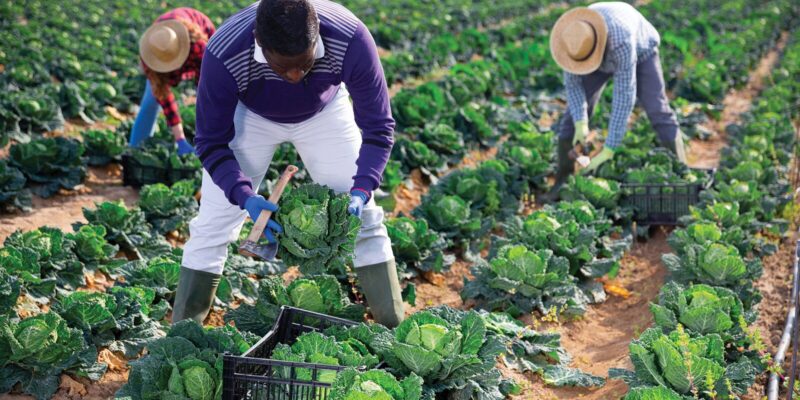
Agriculture remains a vital part of Ghana’s economy, though its share of GDP has shifted, and it is still dominated by smallholder crop farming. Since 2025 the sector has been organised around the Feed Ghana Programme, a four-year transformation plan to 2028 that builds on the lessons of Planting for Food and Jobs with a more integrated, data-driven, and institutionalised model.
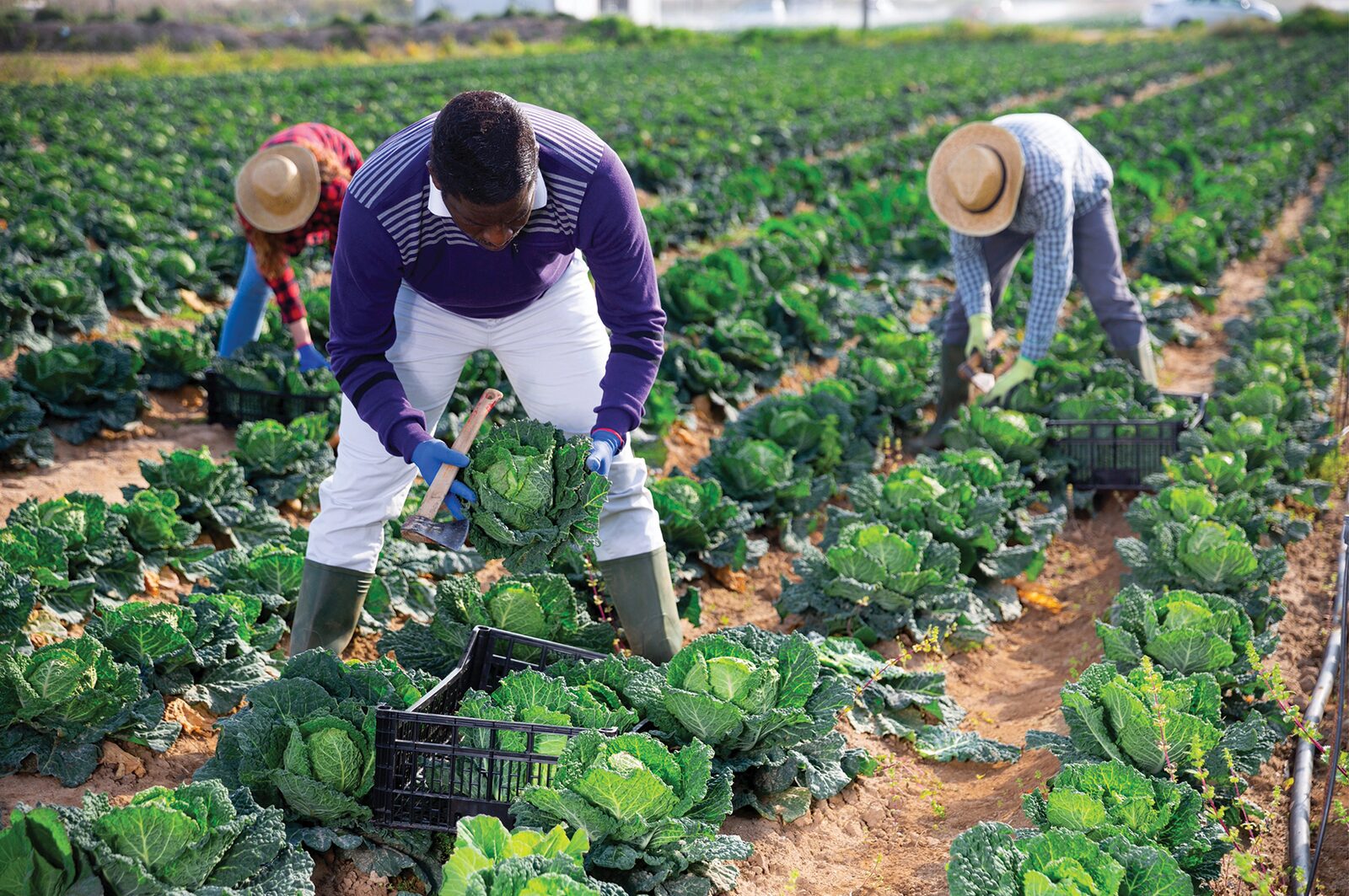
The programme aims to raise productivity, cut imports, strengthen food security, supply raw materials to agro-industry, and grow exports, with a target of 900,000 direct and 1.7 million indirect jobs. Its nine sub-programmes span crop and livestock development, a network of 270 planned Farmers’ Service Centres, farm banks, institutional farming, tree crops, agro-production enclaves covering 100,000 hectares, innovative agricultural financing, and research. For investors, the enclaves and service centres are the clearest points of entry, as both are designed to draw in private capital alongside government and development partners.
CROP SUBSECTOR
Food crops dominate, for both local consumption and export. Cassava output runs above 20 million tonnes a year, and Ghana is a major global yam producer, including the prized pona variety. Plantain, maize, rice, oil palm, oranges, pineapples, groundnuts, and coconuts add to that diversity. Even so, Ghana struggles to meet domestic demand and imports substantial quantities of rice, wheat, soybeans, malt, and various fruits and vegetables, and import substitution is the first stated objective of Feed Ghana.
THE FARMGATE PRICE PAID TO GHANAIAN COCOA FARMERS WAS RAISED TO US$5,040 PER TONNE FROM US$3,100, PLACING GHANA ABOVE CÔTE D’IVOIRE AND REVERSING THE DIFFERENTIAL THAT DROVE CROSS-BORDER SMUGGLING.
COCOA
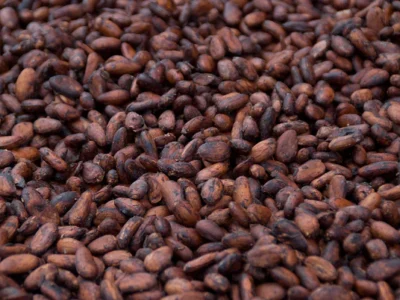
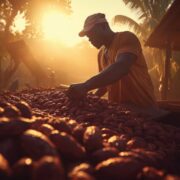
Ghana has produced cocoa since 1879, when Tetteh Quashie introduced Amelonada beans from Fernando Po, and its rainfall, humidity, and temperatures make it ideal for the crop. Ghana remains the world’s second-largest producer. The crop has been the economy’s biggest employer since independence and is a critical source of foreign exchange.
The sector is recovering from a severe downturn. Output fell to around 425,000 tonnes in 2023-24, the weakest in two decades, as swollen shoot virus, adverse weather and illegal mining on farmland took their toll. It recovered to approximately 600,000 tonnes in 2024-25, and the government expects more than 650,000 tonnes in 2025-26 as replanting and disease control take effect.
Pricing has been the decisive lever. The farmgate price was raised to US$5,040 per tonne from US$3,100, placing Ghana above Côte d’Ivoire’s US$4,949 and reversing the differential that had driven cross-border smuggling. For investors in processing, a competitively priced and recovering domestic bean supply is the single most important variable, and it has moved in the right direction.
LIVESTOCK
Livestock development is one of the nine pillars of Feed Ghana, building on the Rearing for Food and Jobs module, which produced notable increases across livestock categories. Ghana still relies heavily on meat imports, particularly chicken, along with cattle offal, beef and veal, and poultry remains one of the largest single import-substitution opportunities in Ghanaian agriculture.
FORESTRY
Trees outside forests fell from 91,029 km² in 2017 to 80,658 km² in 2023 as rangeland, built-up areas and cropland expanded, while trees inside forests increased slightly. Timber remains a significant export: in 2024 Ghana earned €123.4 million from around 273,000 m³ of timber and timber products, including air-dried and kiln-dried lumber, billets, plywood and rotary veneer, an important contribution to foreign exchange earnings.
FISHERIES
Fish provides about 60 per cent of the nation’s protein. In 2023 marine production rose by 12.5 per cent to 425,424 tonnes, while inland production fell by 2.8 per cent to 142,583 tonnes and aquaculture by 12.5 per cent to 116,108 tonnes. Uncontrolled artisanal practices continue to weigh on stocks, and Ghana still runs a fish deficit, with imports of 84,828 tonnes in 2023.
GHANA COMMODITY EXCHANGE (GCX)
Established in 2018, the GCX links producers of agricultural commodities with buyers through segregated trading and warehousing operations, using an electronic warehouse receipt system backed by collateral management services. It trades maize, soybean, sorghum, sesame and rice, improving market access and price discovery for farmers.
DEMAND PROJECTIONS
Ghana’s population of more than 34 million is projected to reach around 52.5 million by 2050, with the urban share rising from about 57 per cent to 72.3 per cent. Combined with a rising middle class and a substantial expected increase in household disposable income, this will drive greater consumer spending on food and strengthens the case for investment across the sector.
SECTOR OPPORTUNITIES
- Climate-resistant seeds and adaptable technology.
- Machinery for poultry and fish feed production.
- Scaling up shea butter processing to meet rising demand.
- Modern aquaculture technology to reduce costs and increase output.
- Rice production and processing to meet local demand, supported by targeted incentives.
- Cocoa processing for value addition and export of processed products.
- The Feed Ghana agro-production enclaves, covering a planned 100,000 hectares, and the 270 Farmers’ Service Centres.
- Commercial poultry production at scale.
INVESTMENT INCENTIVES
- A 5- to 10-year tax holiday for agricultural companies, concessionary corporate income tax rates, and losses carried forward for up to five years.
- The Model Lease Agreement drafted by the Ministry of Food and Agriculture protects the interests of large-scale farmers.
- Improved road access to farming communities under the Export Marketing and Quality Awareness Project,
- Significant improvements in warehousing capacity at the airport and in public and private facilities nationwide.
- Cocoa farmgate prices are now the highest in West Africa, supporting supply security for domestic processors. ■TG






Comments