

 By
By With its enduring democratic credentials, stable political environment, and abundant natural and human resources, Ghana continues to present one of the most attractive investment propositions in West Africa. Despite recent macroeconomic challenges exacerbated by global shocks such as the COVID-19 pandemic, supply chain disruptions, and rising interest rates, the country has demonstrated resilience and is now firmly on the path to recovery. The International Monetary Fund (IMF), which approved a US$3 billion support package for Ghana in May 2023 under the Post-COVID-19 Programme for Economic Growth (PC-PEG), completed its fourth review in July 2025, noting fiscal discipline, monetary tightening, and improved revenue mobilisation efforts, with growth predicted at 4% in 2025.
Ghana is known for its welcoming people and diverse society, comprising over 70 ethnic groups and 49 languages. The population is estimated to be over 34 million, with an average annual growth rate of 2.1%. A significant portion of the population, about 57%, is under 25 years old. Christianity and Islam are the predominant religions, accounting for 71% and 17% of the population respectively. Access to education is improving due to the government’s policy of free education up to the senior secondary level, which is expected to further enhance the quality of the workforce. The government continues to invest in social services and infrastructure to improve citizens’ quality of life.
Ghana is rich in natural resources, making it a prime destination for investment in extractive industries. In 2024, Ghana reaffirmed its status as Africa’s leading gold producer, retaining its top position on the continent. Gold export earnings soared to US$11.6 billion, marking a 52.6% year-on-year increase, driven by higher global prices and expanded output. As of April 2025 Ghana held 31.7 metric tonnes of gold in reserves, ranking 63rd worldwide. Besides gold, Ghana possesses substantial reserves of other minerals, including 13,000 metric tonnes of manganese and 16.86 million metric tonnes of high-grade trihydrate bauxite mined since 1997. Recent discoveries of 30.1 million metric tonnes of lithium deposits position Ghana to become West Africa’s first lithium producer. This is particularly important given the increasing global demand for lithium, driven by the expansion of the electric vehicle market and renewable energy technologies. These abundant natural resources offer vast opportunities for investors in mining and related industries.
AT THE CENTRE OF THE LARGEST TRADE AREA IN THE WORLD
The country’s strategic location in West Africa makes it an ideal gateway for regional trade and investment.

Ghana’s position along the Gulf of Guinea provides easy access to major international shipping routes, facilitating trade with Europe, the Americas, and Asia. Ghana’s participation in the African Continental Free Trade Area (AfCFTA) further enhances its appeal as a regional commerce hub. The AfCFTA, headquartered in Accra, Ghana’s capital, aims to create the world’s largest free trade area, boosting intra-African trade and investment opportunities. The presence of the AfCFTA Secretariat in Ghana underscores the country’s leadership in promoting regional integration and economic cooperation. This strategic advantage enables businesses in Ghana to access common markets, benefit from knowledge transfer through labour mobility, and attract foreign direct investments targeting the broader African market.
The primary goal of AfCFTA is to dismantle trade and customs barriers among all African nations, ultimately establishing a unified market projected to become the world’s largest upon full implementation. This expansive market is estimated to be valued at US$3.4 trillion, encompassing 1.3 billion people across Africa’s 55 countries. By standardising regulations, the free trade area will streamline operations for companies, allowing them to establish a presence in any African country based on uniform rules. Anticipated outcomes include developing regional value chains, with countries specialising in specific goods and services, thereby enhancing overall efficiency and productivity.
In addition to hosting the headquarters, Ghana was among the first nations to trade under the agreement, exporting cocoa powder, rubber, palm oil, and live plants like mushroom spawn to Kenya, and ceramics to Cameroon. It also imported batteries and tea from Kenya, as well as coffee from Rwanda. The government has supported numerous local companies in obtaining the necessary certification to export goods according to AfCFTA regulations. Being one of the initial seven countries selected for the pilot program, Ghana holds a strategic position, serving as a vital gateway for global brands seeking access to broader African market opportunities.
Ghana’s government has implemented various initiatives to foster a favourable business environment, aiming to attract and retain investment, stimulate economic growth, and enhance the competitiveness of the Ghanaian economy. Key incentives include tax holidays, rebates, industrial parks, access to finance through partnering agencies, and interest subsidies, which help reduce operational costs and enhance profitability for businesses in Ghana. Additionally, Ghana has double taxation agreements with countries like the United Kingdom, South Africa, and various EU nations, eliminating double taxation for cross-border businesses and making Ghana more attractive to international investors. Political stability and good governance are crucial to Ghana’s investment appeal, providing a secure environment for businesses and investors, further reinforced by legal frameworks protecting private enterprises from nationalisation.
A STEADY RECOVERY
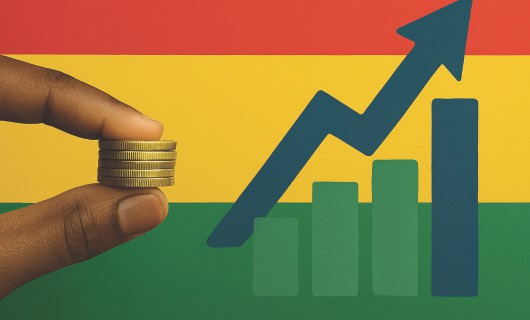 Ghana’s economy, like many others, experienced a slowdown due to the COVID-19 pandemic in 2020. Despite relatively low infection and fatality rates, the country implemented shutdowns and increased social interventions, including water and electricity subsidies. This increased spending, coupled with a slowing economy and reduced revenue, strained national finances and heightened debt exposure. Additional pressures in 2022 came from rising inflation, interest rate hikes, and supply chain disruptions caused by the pandemic and the war in Ukraine. These factors led to Ghana defaulting on its debts to international creditors in December 2022.
In June 2022, the government requested assistance from the IMF. Negotiations commenced swiftly in September 2022, leading to a staff-level agreement by December 2022 and full board approval in May 2023. The government also successfully concluded a domestic debt exchange program and secured similar assurances from its international creditors. Under the IMF package, the government is expected to implement measures to enhance public financial management and undertake long-term, sustainable fiscal and monetary policy reforms, including efforts to improve domestic revenue generation and close tax loopholes.
The most recent IMF review of Ghana’s implementation of conditionalities under the PC-PEG, in July 2025, yielded positive results. Ghanaian officials are committed to using the PC-PEG to establish a more robust and resilient economy while prioritising the welfare of the poor and vulnerable. To complement the IMF program, the African Development Bank Group approved a US$102.59 million grant from the African Development Fund to support Ghana’s Fiscal Consolidation and Economic Recovery Program, spanning 2023–24, aiming to reinforce recent fiscal consolidation and economic recovery reforms.
Since the colonial era, Ghana’s economy has heavily relied on exporting commodities such as gold, oil, cocoa, timber, and agricultural products. Conversely, the country heavily imports finished goods to meet domestic demand. In response, the government has devised a multifaceted strategy to bolster local production, add value to natural resources, and curb imports. This strategy includes providing tax incentives, establishing special economic zones, and developing critical infrastructure to support manufacturing. Additionally, the government is constructing warehouses nationwide to support local producers, addressing historical storage challenges, especially for agricultural suppliers. An upgraded road network connecting rural farms with urban markets is also facilitating agricultural produce marketing, reducing risks and enhancing cost-efficiency.
The automobile manufacturing sector is also growing significantly in Ghana, propelled by the government’s Ghana Automotive Development Policy, introduced in 2020. This has led to renowned global brands like VW, Nissan, Suzuki, Peugeot, and Hyundai establishing assembly plants in the country. To further catalyse the sector, the government is implementing supportive measures such as tax exemptions, including zero-rating VAT on domestically assembled vehicle sales. An asset-based vehicle financing scheme has also been introduced to stimulate demand for these vehicles, ensuring sustained growth and competitiveness in the Ghanaian automotive industry.
A 24-HOUR ECONOMY
In September 2025 President John Mahama launched Ghana’s 24-hour economy policy, a deliberate government intervention which aims to significantly transform the nation’s economic landscape by encouraging and supporting businesses and public institutions to operate around the clock, typically in three eight-hour shifts. The central objectives of this ambitious strategy are robust job creation, particularly for the youth, and a fundamental shift from an import-dependent economy to a self-sufficient, export-led model.
This is Ghana’s first comprehensive policy designed to incentivise continuous operations, moving beyond ad hoc private sector efforts, with the ultimate goals of stabilising the national currency, improving foreign reserves, and curbing inflation. It is seen as a catalyst for Ghana’s economic prosperity and a means to create 1.7 million new jobs, potentially reducing unemployment by 5% by the end of the decade. The policy targets 12 key sectors for this round-the-clock operation, including agroprocessing, pharmaceuticals, manufacturing, Business Process Outsourcing (BPO) and digital startups, financial services, and critical public institutions like ports, customs, and the Driver and Vehicle Licensing Authority (DVLA).
To encourage voluntary adoption, the government is offering a suite of incentives. These include Time-of-Use (TOU) tariffs for lower electricity rates during off-peak hours, facilitated by smart meters, and substantial tax breaks, with businesses operating two shifts receiving a 25% corporate income tax rebate and those running three shifts qualifying for a 50% rebate. Furthermore, the plan includes enhanced night-time security, improved lighting and transport infrastructure in 24/7 hubs, and financial support for strategic sectors such as agroprocessing and manufacturing, with Development Bank Ghana providing long-term, low-interest loans.
Ghana’s implementation plan emphasises voluntary participation from businesses, supported by forthcoming legislative reforms, including a new Employment Act to regulate shift work. The policy is demand-driven, capitalising on the existing high demand for local production, given that approximately 90% of goods consumed in Ghana are currently imported. This public–private synergy, combining government incentives with private sector initiative, is crucial for the policy’s success, aiming to fundamentally restructure Ghana’s economy and ensure sustained growth.
LEVERAGING HISTORIC TIES FOR GROWTH
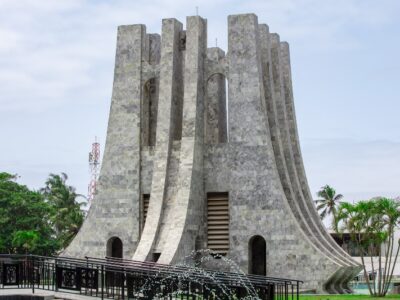
Since gaining independence in 1957, Ghana has sought to build and consolidate its historical and cultural ties with the African diaspora. Dr Kwame Nkrumah, Ghana’s founding president, envisioned uniting the Black diaspora with the homeland and took steps to actualise this. In the modern era, Ghana has adopted a more economic approach to this vision, seeking to harness the talents, contacts, and investment capacities of its citizens abroad and the wider African diaspora to achieve its economic goals. In 2019, Ghana extended an open invitation to people of the Black diaspora to commemorate the 400th anniversary of the arrival of the first slave ships in America, reflecting this long-pursued policy.
The Diaspora Affairs Office, established by the immediate past administration and operating directly under the presidency, serves as a focal point for policy and engagement with the diaspora. Through this office, more Ghanaians in the diaspora and people of Black descent are re-engaging with Ghana in diverse ways, contributing their expertise and ideas to establish new businesses and rejuvenate existing ones. Among other initiatives, the office has worked to streamline procedures to encourage more people to take up citizenship and connect with the country emotionally and administratively.
Notably, in May 2024 multi-Grammy award-winning musician Stevie Wonder took the oath of citizenship in the presence of then-President Akufo Addo. Building on the success of 2019’s ‘Year of Return’ the government aims to establish sustainable connections with the global Black diaspora to promote investment and leisure visits under the overarching policy of ‘Beyond the Return’. This includes capitalising on the growing trend of Ghanaians abroad and other tourists spending the December holiday season in the country. Some local chiefs have gone further by providing land to those seeking to settle or invest in the country. These initiatives reflect a deep-seated belief that Ghana should continue to be a beacon for its sons and daughters scattered across the globe, regardless of the duration of their absence.
THE ONLY WAY IS UP
After a challenging period, Ghana is on the cusp of a new era of development. With a robust democracy that has endured for three decades and a longstanding peace, Ghana remains a reliable destination for both local and foreign investment. The nation is resilient and poised for resurgence, buoyed by its abundant human and natural resources. With macroeconomic indicators and the economy projected to grow further this year, Ghana is set to reaffirm its status as a regional economic powerhouse, characterised by a stable economy, a flourishing local industry, and technologically advanced service delivery. With a welcoming and industrious population, a resourceful and innovative private sector, and a government committed to creating a more conducive environment, Ghana is ready to collaborate with the global community in building a more prosperous future for all.

Ghana is tackling the severe macroeconomic imbalances that peaked in 2022 and has made steady progress toward economic stabilisation. In 2023, Ghana negotiated a three-year IMF-supported Extended Credit Facility (ECF) programme. The government has taken decisive action, including acceleration of the fiscal adjustment process and sustained progress on comprehensive debt restructuring. The fiscal position is projected to gradually improve, reaching a primary surplus of 1.5% of GDP from 2025 onward. The right set of fiscal rules and institutions could help curb spending pro-cyclicality and strengthen debt sustainability. Ghana’s recent fiscal rule framework has been suspended since the beginning of the COVID-19 pandemic. Fiscal rules have been used successfully to promote debt sustainability, create a more predictable fiscal policy framework, and build buffers against adverse macroeconomic shocks. Policy makers should consider a combination of an expenditure and a debt rule (with well-defined escape clauses), with potential to foster debt sustainability and reduce the pro-cyclicality of government spending. In addition, given the specific macro-fiscal risks linked to external borrowing, the fiscal rule design could consider including a capping mechanism. Finally, the authorities should review the fiscal council framework to strengthen its independence and clarify its mandate.
Source: Building the Foundations for a Resilient and Equitable Fiscal Policy (World Bank Group);
WHY INVEST IN GHANA
Second largest economy in West Africa
- Ghana’s retail market is vibrant and robust with household spending projected to rise significantly to US$81 billion by 2025 (according to Fitch.
- The AfCFTA, which has its secretariat in Accra, offers substantial potential for intra-regional growth, allowing businesses to leverage access to common markets and benefit from knowledge transfer through labour mobility.
Stable political environment
- Ghana is ranked as the fourth most peaceful country in Africa and the 51st most peaceful country in the world according to the 2023 Global Peace Index.
- The Ghanaian constitution (Article 20) and the Free Zones Act (Act 504) provide protections against the threat of nationalisation of private businesses.
Natural resource wealth
- Ghana is the largest producer of gold in Africa and the sixth largest in the world.
- It has an estimated 13,000 metric tonnes of manganese; has mined over 16 million metric tonnes of high grade trihydrate bauxite since 1997 and in 2021, discovered lithium deposits amounting to 30.1 million metric tonnes, positioning Ghana to become West Africa’s first lithium producer, a critical mineral for the growing global electric vehicle market.
Pro-business climate
- The government has introduced numerous incentives to create a conducive and enabling business environment, including tax holidays and rebates, provision of industrial parks, access to finance through partnering agencies, and interest subsidies.
- Ghana has established double taxation agreements with the United Kingdom, South Africa, and various EU countries, facilitating smoother international business operations.
- Ghana continues to receive robust foreign direct investment, recording US$617.61 million of receipts in 2022, mainly directed to oil and gas, mining (gold and manganese), and agriculture (notably cocoa).
Demographic advantage
- Ghana has a very youthful population with about 67% of the population between the ages of 15 to 64 years.
- Government initiatives such as free basic and secondary education have ensured a 70% literacy rate for citizens who are six years and older as at 2023.






Comments